
What Happens Inside Walls During the First 24 Hours After Water Exposure
Introduction
Most homeowners focus on what they can see—wet floors, dripping ceilings, or visible leaks. But the real threat lies behind walls, where moisture spreads unnoticed.
The first 24 hours of water damage inside walls are crucial. During this time, water penetrates drywall, insulation, and framing, creating the perfect environment for long-term structural damage and mold growth.
That's why immediate response is essential. Professional services like emergency restoration are designed to act quickly, stop the spread, and begin the drying process before the damage escalates.
TLDR Quick Guide
Here's What Happens During the First 24 Hours of Water Damage Inside Walls
- Water spreads rapidly through porous materials
- Drywall and insulation begin absorbing moisture
- Hidden damage develops behind surfaces
- Mold growth can begin within 24–48 hours
- Structural weakening may start early
Fast action is critical to prevent long-term damage.
The First Hour: Rapid Absorption Begins
Water Penetrates Drywall and Insulation
Within minutes of exposure, water begins soaking into drywall and insulation. These materials are highly porous, meaning they absorb moisture quickly.
This initial absorption creates the foundation for deeper structural damage.
Moisture Spreads Horizontally and Vertically
Water doesn't stay in one place. It travels through wall cavities, spreading both upward and downward.
Even a small leak can affect a much larger area than expected.
2–6 Hours: Hidden Damage Expands
Saturation Increases Inside Walls
As time passes, more water is absorbed into materials. Insulation becomes saturated, and drywall begins to weaken.
This stage is often invisible from the outside, making it especially dangerous.
Electrical and Structural Risks Develop
Water inside walls can come into contact with electrical wiring, increasing safety risks. At the same time, structural components begin to absorb moisture.
These risks make early intervention critical.
6–12 Hours: Materials Begin to Break Down
Drywall Weakening and Warping
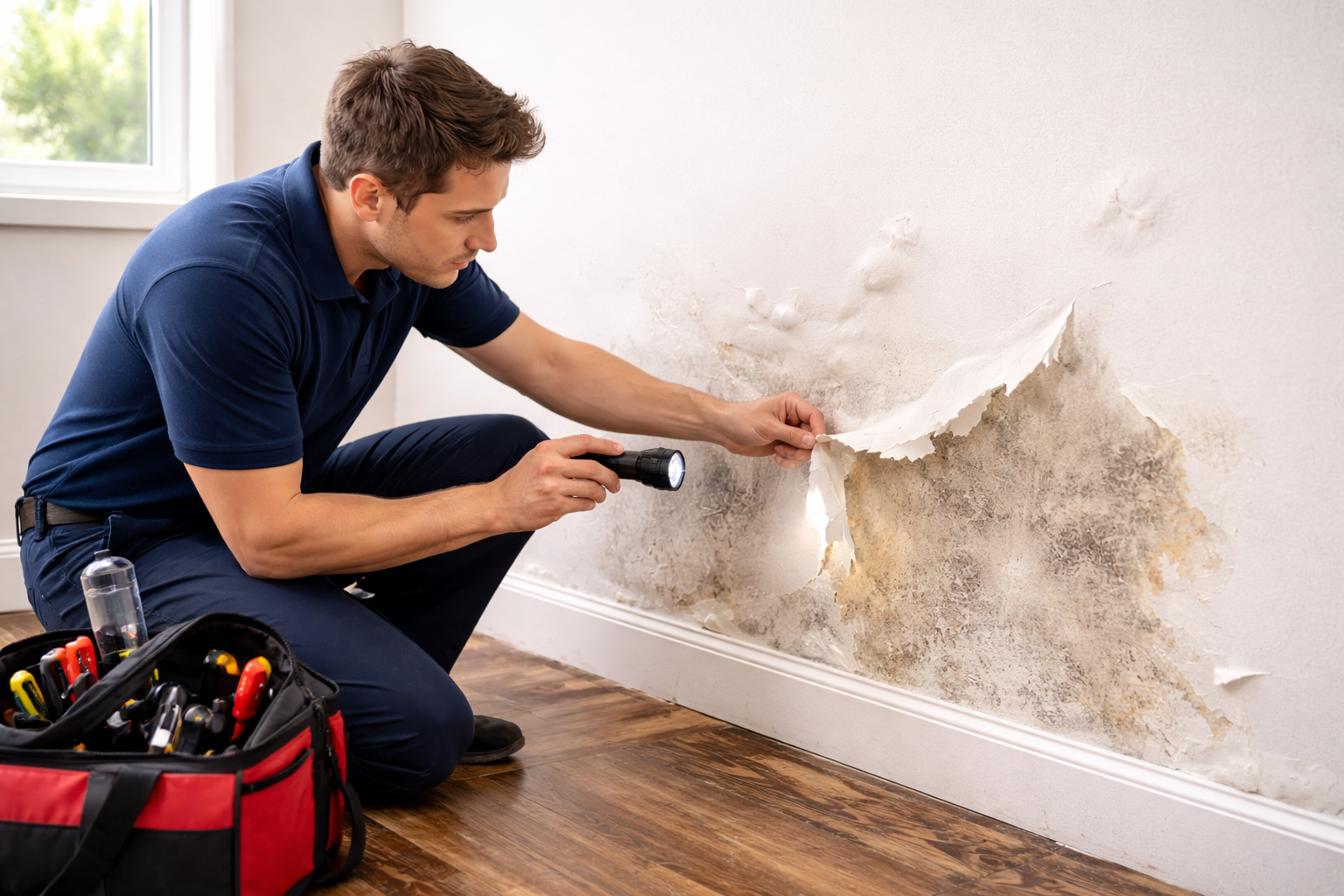
As moisture continues to build, drywall starts to lose its strength. It may begin to warp, bulge, or soften.
This is often the first visible sign of water damage inside walls.
Odor Development Begins
A damp, musty smell may start to develop as moisture lingers. This is an early indication that conditions are forming for microbial growth.
Ignoring this stage allows damage to worsen rapidly.
12–24 Hours: Mold Risk and Structural Damage Increase
Ideal Conditions for Mold Growth
Within 24 hours, moisture trapped inside walls creates the perfect environment for mold. While mold may not be visible yet, the conditions for growth are already present.
This is why acting within this window is so important.
Structural Components Begin to Weaken
Wood framing and other structural materials start absorbing moisture. Over time, this can lead to warping, weakening, and long-term damage.
If left untreated, this may require extensive structural repairs to restore the property.
Common Causes of Water Damage Inside Walls
Burst Pipes and Plumbing Failures
One of the most common causes is a sudden pipe failure. Situations like burst pipes can release large amounts of water quickly, affecting entire wall systems.
Immediate response is critical in these cases.
Appliance Leaks and Hidden Issues
Leaks from appliances such as dishwashers or washing machines can go unnoticed for long periods. These slow leaks often cause significant hidden damage inside walls.
Over time, they can lead to mold and structural problems.
Storm and Flood Damage
Heavy rain or flooding can force water into walls through cracks or openings. In severe cases, events like flooding can saturate entire sections of a property.
This type of damage requires immediate professional attention.
Why Immediate Action Matters
Preventing Mold and Health Risks
Mold can begin developing within 24–48 hours of water exposure. Once it spreads, it can affect indoor air quality and pose health risks.
Early drying prevents mold from taking hold.
Reducing Repair Costs
The longer water sits inside walls, the more damage it causes. Acting quickly can reduce the extent of repairs needed.
Professional water damage restoration helps stop the damage early and restore affected areas efficiently.
What Professionals Do During the First 24 Hours
Moisture Detection and Assessment
Experts use advanced tools to detect hidden moisture inside walls. This ensures that all affected areas are identified and treated.
Accurate assessment is key to effective restoration.
Water Extraction and Drying
Specialized equipment is used to remove water and dry materials thoroughly. This includes air movers, dehumidifiers, and moisture monitoring systems.
Proper drying prevents long-term damage.
Key Takeaways
- Water damage inside walls begins immediately after exposure.
- Moisture spreads quickly through drywall, insulation, and framing.
- Hidden damage can develop within hours, even without visible signs.
- Mold risk begins within the first 24–48 hours.
- Fast professional response minimizes damage and repair costs.
FAQs
How quickly does water damage spread inside walls?
Water can begin spreading inside walls within minutes of exposure. It moves through porous materials like drywall and insulation quickly. Within hours, it can affect a much larger area than expected.
Can water damage inside walls go unnoticed?
Yes, water damage inside walls is often hidden and difficult to detect early. Signs may not appear until significant damage has already occurred. This is why professional inspection is important.
When does mold start forming after water damage?
Mold can begin forming within 24 to 48 hours of water exposure. Moist environments inside walls create ideal conditions for growth. Acting quickly helps prevent mold from developing.
Is it safe to leave wet walls to dry on their own?
No, air drying is usually not sufficient for water damage inside walls. Moisture can remain trapped and lead to mold or structural issues. Professional drying ensures complete moisture removal.
When should I call a restoration company?
You should call a restoration company as soon as water damage is detected. Early response helps prevent further damage and reduces repair costs. Immediate action is always the best approach.