
What Affects Structural Drying Duration After Water Damage in a Property
Introduction
Water damage can happen suddenly—from burst pipes to flooding or severe storms. While removing standing water is the first step, the real challenge lies in thoroughly drying the structure to prevent hidden damage.
The structural drying duration depends on several factors, including the severity of the damage, materials affected, and how quickly professional restoration begins. Delays in proper drying can lead to mold growth, compromised structural integrity, and expensive repairs.
That’s why many property owners turn to professional services like water damage restoration to ensure the drying process is handled correctly from the start.
TLDR Quick Guide
Here’s a quick breakdown of what affects structural drying duration:
- Amount of water and level of saturation
- Type of materials affected (wood, drywall, concrete)
- Temperature and humidity levels
- Airflow and drying equipment used
- Speed of response after the damage
Most structural drying processes take 3 to 7 days, but severe cases may take longer depending on conditions.
Key Factors That Affect Structural Drying Duration
Amount of Water Exposure
The more water that enters a property, the longer it will take to dry. Minor leaks may only affect surface areas, while major flooding can saturate entire structural components.
Deep saturation requires specialized equipment and more time to extract moisture completely.
Type of Materials Involved
Different materials absorb and retain water differently. For example:
- Drywall absorbs water quickly and may need replacement
- Wood can retain moisture and warp if not dried properly
- Concrete takes longer to release trapped moisture
These differences significantly impact overall drying time.
Hidden Moisture and Structural Penetration
Water often travels beyond visible areas. It can seep behind walls, under flooring, and into insulation.
Without proper detection tools, hidden moisture can remain trapped, extending the structural drying duration and increasing the risk of mold.
Environmental Conditions That Impact Drying
Temperature
Warm air helps accelerate evaporation, which speeds up the drying process. Colder environments slow down moisture removal and extend drying timelines.
Professionals often use controlled heating to optimize drying conditions.
Humidity Levels
High humidity makes it harder for moisture to evaporate. Dehumidifiers are essential to remove excess moisture from the air and maintain efficient drying conditions.
Balancing humidity is critical to reducing drying time.
Airflow and Ventilation
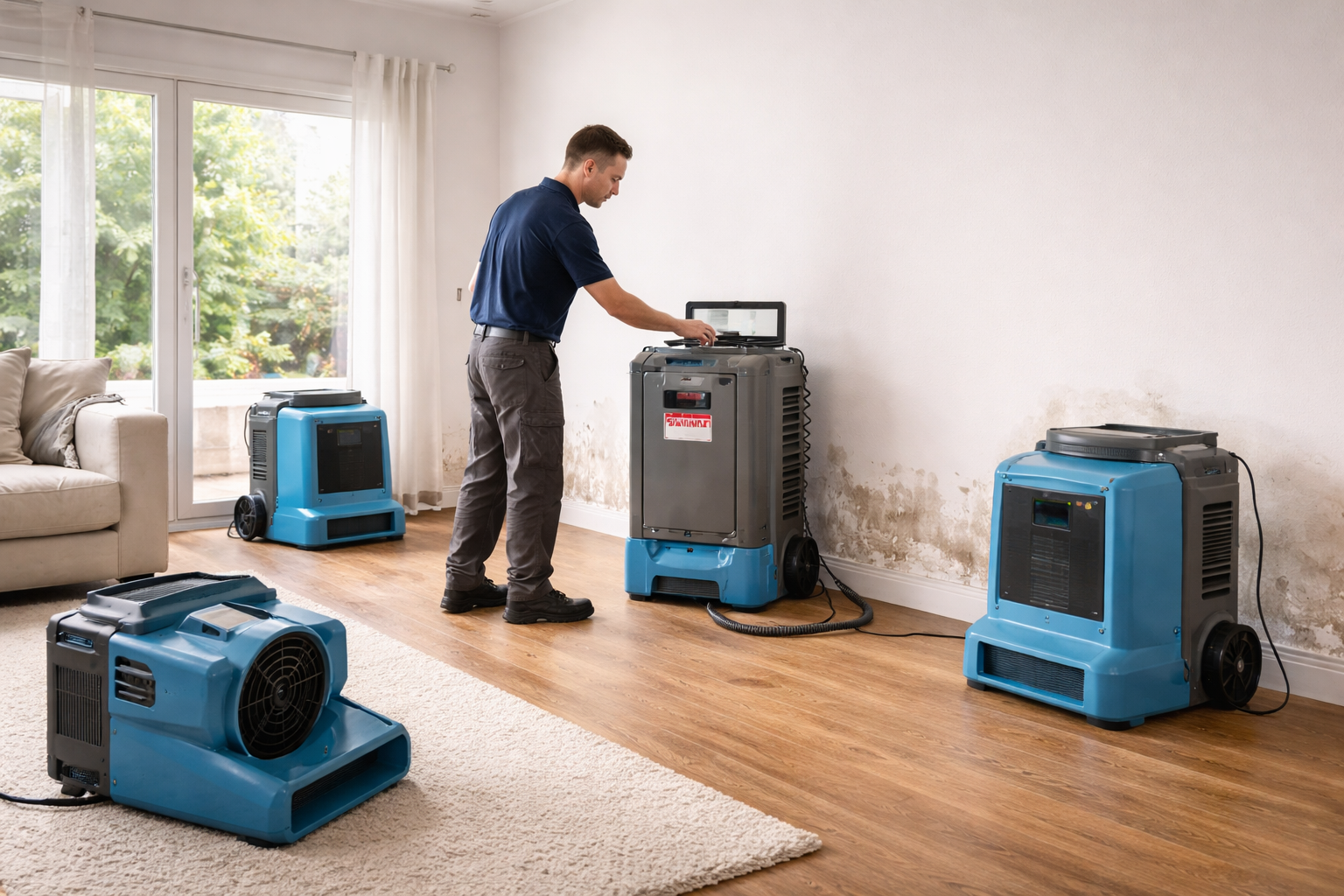
Proper airflow helps move moisture away from wet surfaces. Industrial air movers are used to circulate air and promote faster evaporation.
Without adequate airflow, moisture can remain trapped, prolonging the drying process.
The Role of Professional Equipment and Expertise
Advanced Drying Equipment
Professional restoration companies use specialized equipment such as:
- Industrial air movers
- Dehumidifiers
- Moisture meters
- Thermal imaging tools
These tools ensure thorough drying and accurate moisture detection.
Emergency Response Time
The sooner restoration begins, the shorter the structural drying duration. Delayed action allows water to penetrate deeper into materials, making the drying process more complex.
Fast response services like emergency restoration can significantly reduce damage and recovery time.
When Structural Repairs Are Needed
Damage Beyond Drying
In some cases, drying alone is not enough. Structural components may be too damaged to restore and require replacement.
This can extend the overall restoration timeline.
Transition to Repairs
After drying is complete, repairs may be necessary to restore the property fully. Services such as structural repairs address damage to walls, flooring, and other building components.
Proper drying ensures repairs are effective and long-lasting.
How to Reduce Structural Drying Time
Act Immediately
Quick action is the most important factor in minimizing damage. The sooner water is removed and drying begins, the better the outcome.
Delays can lead to increased saturation and longer drying times.
Use Professional Services
DIY drying methods are often insufficient for structural damage. Professional services ensure that all moisture is properly removed, including hidden areas.
This reduces the risk of future issues such as mold or structural weakening.
Monitor the Drying Process
Regular moisture checks help ensure that drying is progressing correctly. Professionals use specialized tools to confirm when materials are fully dry.
This prevents premature repairs and ensures complete restoration.
Key Takeaways
- Structural drying duration depends on water volume, materials, and environmental conditions.
- Most drying processes take 3–7 days but can vary based on severity.
- Fast response significantly reduces drying time and prevents further damage.
- Professional equipment ensures thorough moisture removal.
- Proper drying is essential before any structural repairs are completed.
FAQs
How long does structural drying usually take?
Structural drying typically takes between 3 to 7 days in most cases. However, the timeline can vary depending on the extent of water damage and environmental conditions. Severe damage may require additional time to ensure complete drying.
What happens if a structure is not dried properly?
Improper drying can lead to mold growth, wood rot, and structural weakening. Moisture trapped inside materials can cause long-term damage that may not be immediately visible. This often results in costly repairs later on.
Can I speed up the drying process myself?
While fans and ventilation can help, professional equipment is usually required for effective structural drying. DIY methods often fail to remove hidden moisture. Professional services ensure a more thorough and faster drying process.
Why is professional water damage restoration important?
Professional restoration ensures that all moisture is properly removed from both visible and hidden areas. Experts use specialized tools to detect and eliminate moisture effectively. This reduces the risk of future damage and speeds up recovery.
Does structural drying prevent mold growth?
Yes, proper drying is essential for preventing mold growth. Mold can begin to develop within 24 to 48 hours if moisture is not removed. Thorough drying eliminates the conditions needed for mold to thrive.