
What Happens After a Sewage Backup and How Contamination Spreads Indoors
Introduction
A sewage backup is one of the most hazardous situations a homeowner or property manager can face. Beyond the immediate mess, it introduces dangerous contaminants into your living space that can quickly spread and create serious health risks. Understanding the steps to take after a sewage backup is critical to protecting both your property and the people inside it.
When sewage enters your home, it carries bacteria, viruses, and toxins that can contaminate floors, walls, furniture, and even the air. What starts as a localized issue can rapidly escalate into a widespread problem if not addressed properly.
Acting quickly is essential. Many property owners rely on professional sewage cleanup services to safely remove contamination and prevent long-term damage. The faster the response, the lower the risk of structural damage and health complications.
TLDR Quick Guide
Stop using water and shut off the main supply if needed.
Avoid contact with contaminated water.
Ventilate the area if it is safe to do so.
Call professionals for emergency restoration services.
Begin cleanup immediately to prevent contamination spread.
Quick action minimizes damage, reduces health risks, and speeds up recovery.
What Happens After a Sewage Backup?
Immediate Contamination
When a sewage backup occurs, contaminated water floods into the affected area carrying harmful pathogens. This water often contains bacteria like E. coli, viruses, and other biohazards that can cause serious illness.
Within minutes, porous materials such as carpets, drywall, and upholstery begin absorbing contaminated water. This makes cleanup more complex and increases the risk of long-term contamination.
Even surfaces that appear clean may still harbor invisible contaminants.
Rapid Spread Through the Home
Sewage contamination does not stay in one place. It spreads quickly through foot traffic, air circulation, and moisture absorption.
As people move through the affected area, contaminants can transfer to other parts of the home. HVAC systems may also circulate contaminated air, allowing bacteria to reach areas far from the original source.
This is why immediate containment and professional cleanup are essential.
How Contamination Spreads Indoors
Absorption Into Materials
Porous materials act like sponges during a sewage backup. Carpets, insulation, and wood can absorb contaminated water, allowing bacteria to settle deep within the structure.
Once absorbed, these materials can continue to release harmful contaminants over time if not properly treated or replaced.
Professional restoration teams assess which materials can be salvaged and which must be removed.
Airborne Contaminants
As contaminated water dries, it can release microscopic particles into the air. These particles may contain bacteria and toxins that pose respiratory risks.
Poor indoor air quality can develop quickly after a sewage incident, especially in enclosed spaces.
This is why professional water damage restoration often includes air filtration and dehumidification to restore safe conditions.
Steps to Take After a Sewage Backup
Prioritize Safety First
The first priority is safety. Avoid direct contact with contaminated water, as it may contain harmful pathogens.
If the affected area is large, consider evacuating until professionals assess the situation. Protective gear is essential if entering the contaminated space.
Never attempt to clean sewage without proper equipment.
Stop the Source of the Backup
If possible, identify and stop the source of the sewage backup. This may involve shutting off the water supply or contacting a plumber.
Stopping the flow prevents further contamination and limits damage.
However, even after the source is stopped, cleanup must begin immediately.
Call Professional Restoration Services
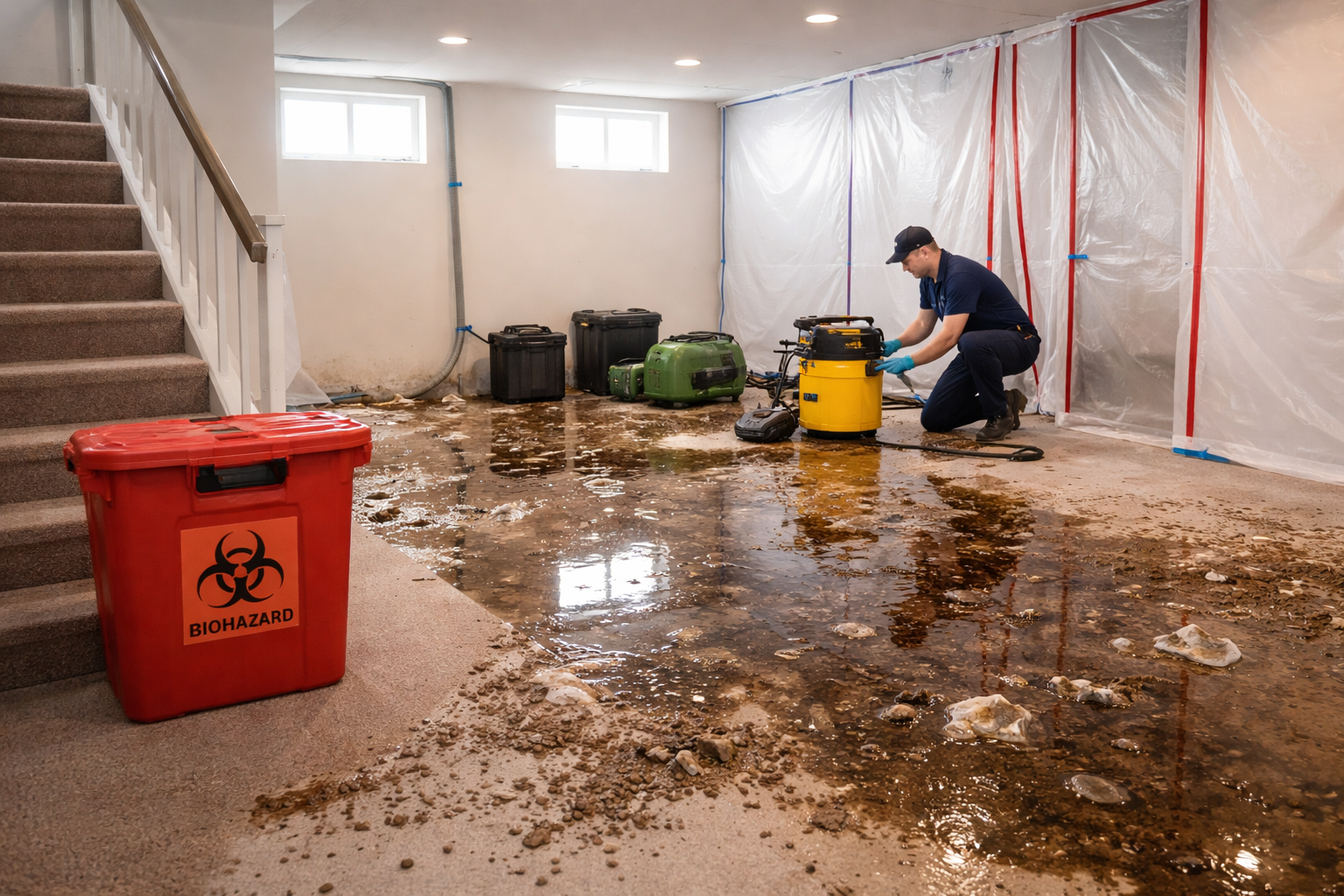
Sewage cleanup is not a typical cleaning task—it requires specialized equipment and expertise. Professional teams use industrial-grade disinfectants, extraction tools, and protective gear to safely remove contamination.
Companies like Disaster Experts provide rapid-response services designed to handle hazardous situations efficiently.
Attempting DIY cleanup can increase health risks and lead to incomplete sanitation.
Health Risks of Sewage Exposure
Bacterial and Viral Infections
Sewage water contains a wide range of harmful microorganisms. Exposure can lead to infections, gastrointestinal illness, and skin irritation.
Even brief contact with contaminated water can pose health risks.
Children, elderly individuals, and those with weakened immune systems are especially vulnerable.
Long-Term Indoor Air Quality Issues
If not properly cleaned, sewage contamination can lead to persistent indoor air quality problems. Mold growth may develop within days, further increasing health risks.
Lingering odors and airborne contaminants can affect comfort and safety inside the home.
Professional cleanup ensures that all contamination is fully removed.
Preventing Long-Term Damage
Structural Impact
Sewage backups can cause significant structural damage if not addressed quickly. Water saturation weakens materials such as drywall, wood, and flooring.
Over time, this can lead to warping, deterioration, and costly repairs.
In severe cases, restoration may require structural reconstruction.
Importance of Thorough Cleanup
Thorough cleaning and disinfection are essential to prevent recurring issues. Residual contamination can lead to ongoing health hazards and unpleasant odors.
Professional restoration teams ensure that all affected areas are properly treated and restored.
This level of cleaning goes beyond what standard household methods can achieve.
Key Takeaways
Steps to take after a sewage backup must be immediate and focused on safety.
Sewage contamination spreads quickly through surfaces, air, and movement.
Porous materials can absorb harmful bacteria and require professional treatment.
Health risks include infections, respiratory issues, and long-term exposure concerns.
Professional restoration is essential for safe and complete cleanup.
FAQs
What should I do immediately after a sewage backup?
You should avoid contact with contaminated water and stop using plumbing fixtures. Turn off the water supply if possible and ventilate the area. Contact professional restoration services as soon as possible.
Is it safe to clean sewage myself?
Cleaning sewage without proper equipment is not recommended. The water contains harmful bacteria and toxins that pose serious health risks. Professional cleanup ensures safe and thorough sanitation.
How quickly does contamination spread?
Contamination can begin spreading within minutes through water absorption and movement. Airborne particles can also distribute bacteria throughout the home. Immediate action is critical to limit the spread.
Can sewage damage be permanent?
Yes, sewage damage can become permanent if not treated quickly. Materials like drywall and flooring may need to be replaced. Early intervention can reduce long-term damage and repair costs.
How long does sewage cleanup take?
The timeline depends on the severity of the damage. Minor incidents may take a few days, while extensive contamination can take longer. Professional teams assess the situation and provide a detailed restoration plan.