
Drying and Dehumidification Services: How Professionals Stabilize Structures After Water Damage
Introduction
After water damage, what you can see is only part of the problem. Moisture quickly penetrates walls, flooring, insulation, and structural framing—creating hidden risks that worsen over time. This is where professional drying & dehumidification services play a vital role. By removing trapped moisture and controlling humidity, restoration professionals stabilize structures, prevent mold growth, and stop secondary damage before it begins.
Jump To:
TLDR Quick Guide
- Drying & dehumidification services are critical after water damage to stop deterioration and mold growth.
- Professionals use industrial equipment to remove hidden moisture from walls, floors, and structural materials.
- Proper drying stabilizes buildings and prevents long-term damage that surface drying alone can’t fix.
- Moisture monitoring ensures materials reach safe, dry standards before repairs begin.
- These services are a core step in professional water damage restoration.
Why Drying and Dehumidification Are Essential After Water Damage
Water Damage Doesn’t End When the Water Is Gone
Even after standing water is removed, materials continue absorbing moisture. Wood swells, drywall weakens, and metal components can corrode. Without proper drying, these materials degrade silently and compromise structural integrity.
Humidity Fuels Secondary Damage
Elevated indoor humidity creates the perfect environment for mold, bacteria, and odors. Within 24–48 hours, microbial growth can begin. Professional drying controls humidity levels to stop this process early.
How Professionals Perform Drying and Dehumidification
Industrial-Grade Drying Equipment
Restoration professionals use high-powered air movers to circulate air across wet surfaces. This accelerates evaporation from building materials. Unlike household fans, these machines are designed for controlled, high-volume airflow.
Commercial Dehumidifiers Remove Moisture From the Air
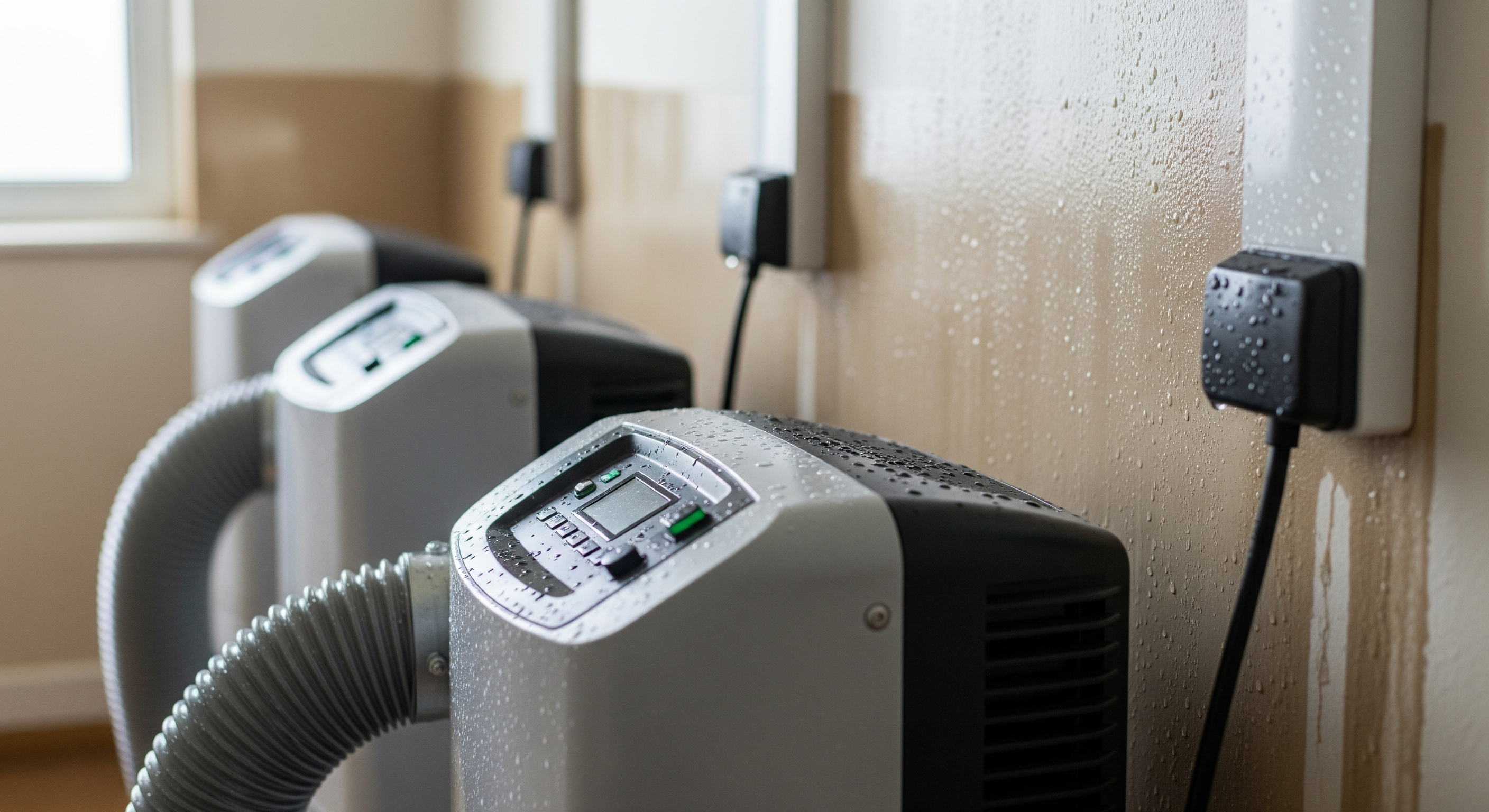
As moisture evaporates, it must be removed from the environment. Commercial dehumidifiers extract large volumes of water vapor, keeping humidity levels low. This allows materials to continue drying efficiently without reabsorbing moisture.
Moisture Mapping and Monitoring
Professionals don’t guess when a structure is dry. Moisture meters and thermal imaging identify hidden moisture in walls, floors, and ceilings. Drying continues until all materials return to safe moisture levels.
How Drying Stabilizes Structures
Preventing Structural Weakness
Prolonged moisture weakens framing, subfloors, and support materials. Proper drying halts this degradation early. This stabilization reduces the need for extensive demolition or reconstruction later.
Protecting Finishes and Materials
Effective drying can often save flooring, cabinetry, and wall materials that might otherwise be replaced. This lowers restoration costs and shortens recovery time. It also preserves the original structure whenever possible.
Drying as Part of the Full Restoration Process
Integrated With Water Damage Restoration
Drying and dehumidification are a core phase ofwater damage restoration. They ensure the structure is stable before repairs or reconstruction begin. Skipping or rushing this step leads to recurring problems.
Supporting Storm and Sewage Cleanup
Severe storms and sewage backups introduce moisture deep into structures. Services likestorm damage restorationandsewage cleanuprely on professional drying to fully sanitize and stabilize affected areas.
Preparing for Structural Repairs
Before rebuilding can begin, materials must be dry and sound. Drying services create the foundation for safestructural repairs. This ensures repairs last and meet safety standards.
Why Professional Drying Is Better Than DIY Methods
Household Equipment Isn’t Enough
Shop vacs, fans, and residential dehumidifiers lack the capacity to dry structures thoroughly. They often miss moisture trapped behind walls or under floors. This leaves hidden damage that resurfaces months later.
Professionals Follow Proven Drying Standards
Certified restoration teams follow industry drying standards and documentation protocols. This ensures drying is complete, verifiable, and safe. It also supports insurance claims and long-term property protection.
Key Takeaways
- Drying & dehumidification services are essential after any water intrusion.
- Hidden moisture causes long-term structural and health issues if not addressed.
- Professional equipment removes moisture from both materials and air.
- Monitoring ensures structures are fully stabilized before repairs.
- Proper drying prevents mold, odors, and costly future damage.
FAQs
1. How long does professional drying and dehumidification take?
Most drying projects take between 3 and 7 days, depending on the extent of water damage. Larger or more severe losses may require additional time. Continuous monitoring ensures drying is completed properly, not prematurely.
2. Can drying prevent mold growth?
Yes, rapid and thorough drying significantly reduces the risk of mold growth. Mold thrives in moist environments, especially within the first 48 hours. Controlling humidity early is one of the most effective prevention strategies.
3. Do walls and floors need to be removed for drying?
Not always. Professionals often dry materials in place using targeted airflow and dehumidification. Removal is only necessary when materials are too saturated or structurally compromised.
4. Is drying covered by insurance?
In many cases, drying and dehumidification are covered as part of a water damage claim. Coverage depends on the cause of loss and your policy. Proper documentation from restoration professionals supports the claims process.
5. What happens if drying is skipped or rushed?
Skipping or rushing drying can lead to mold growth, structural damage, and recurring moisture problems. These issues are far more expensive to fix later. Proper drying protects both the building and occupant health.