
Commercial Disaster Restoration Phases That Take Businesses From Damage to Full Recovery
Introduction
When disaster strikes a commercial property, speed, coordination, and expertise determine how quickly a business can recover. Commercial disaster restoration is not a single service—it’s a phased process designed to stabilize damage, protect assets, and return operations to normal as efficiently as possible. Understanding these phases helps business owners, property managers, and facilities teams know what to expect and how professional restoration teams guide recovery from chaos to continuity.
Jump To:
TLDR Quick Guide
- Commercial disaster restoration follows a structured, multi-phase process designed to minimize downtime.
- Immediate emergency response protects people, assets, and operations.
- Drying, cleanup, and stabilization prevent secondary damage.
- Structural repairs restore safety and functionality.
- Coordinated restoration helps businesses reopen faster and stronger.
Phase 1: Emergency Response and Site Stabilization
Immediate Safety and Damage Control
The first phase focuses on protecting occupants, employees, and responders. Power shutdowns, hazard containment, and site security prevent further loss. Rapid response is critical to limit damage spread and liability.
Stopping Active Damage
Whether caused by flooding, fire suppression, or storms, active damage must be halted immediately. Emergency services such as emergency restoration prevent escalation and create a controlled environment for recovery.
Phase 2: Assessment and Restoration Planning
Comprehensive Damage Evaluation
Restoration professionals perform detailed inspections to assess structural, mechanical, and environmental damage. Moisture mapping, air quality testing, and material evaluations identify hidden risks. This assessment forms the blueprint for recovery.
Business-Focused Recovery Strategy
Commercial restoration plans prioritize operational continuity. Critical areas, equipment, and timelines are identified early. This phase ensures restoration aligns with business needs, not just structural repair.
Phase 3: Water, Fire, or Contaminant Mitigation
Water and Moisture Removal
Water intrusion is common in many disasters and must be addressed quickly. Services like water damage restoration extract standing water, dry structures, and control humidity. This prevents mold growth and material failure.
Fire, Smoke, and Soot Cleanup
Fire damage extends beyond flames. Smoke residue, odor, and corrosion require specialized treatment. Professional fire damage restoration removes contaminants and prepares surfaces for repair.
Handling Hazardous Contamination
Events involving sewage or biohazards demand strict protocols. Sewage cleanup ensures sanitation, compliance, and safe reoccupation.
Phase 4: Structural Drying and Stabilization
Preventing Secondary Damage
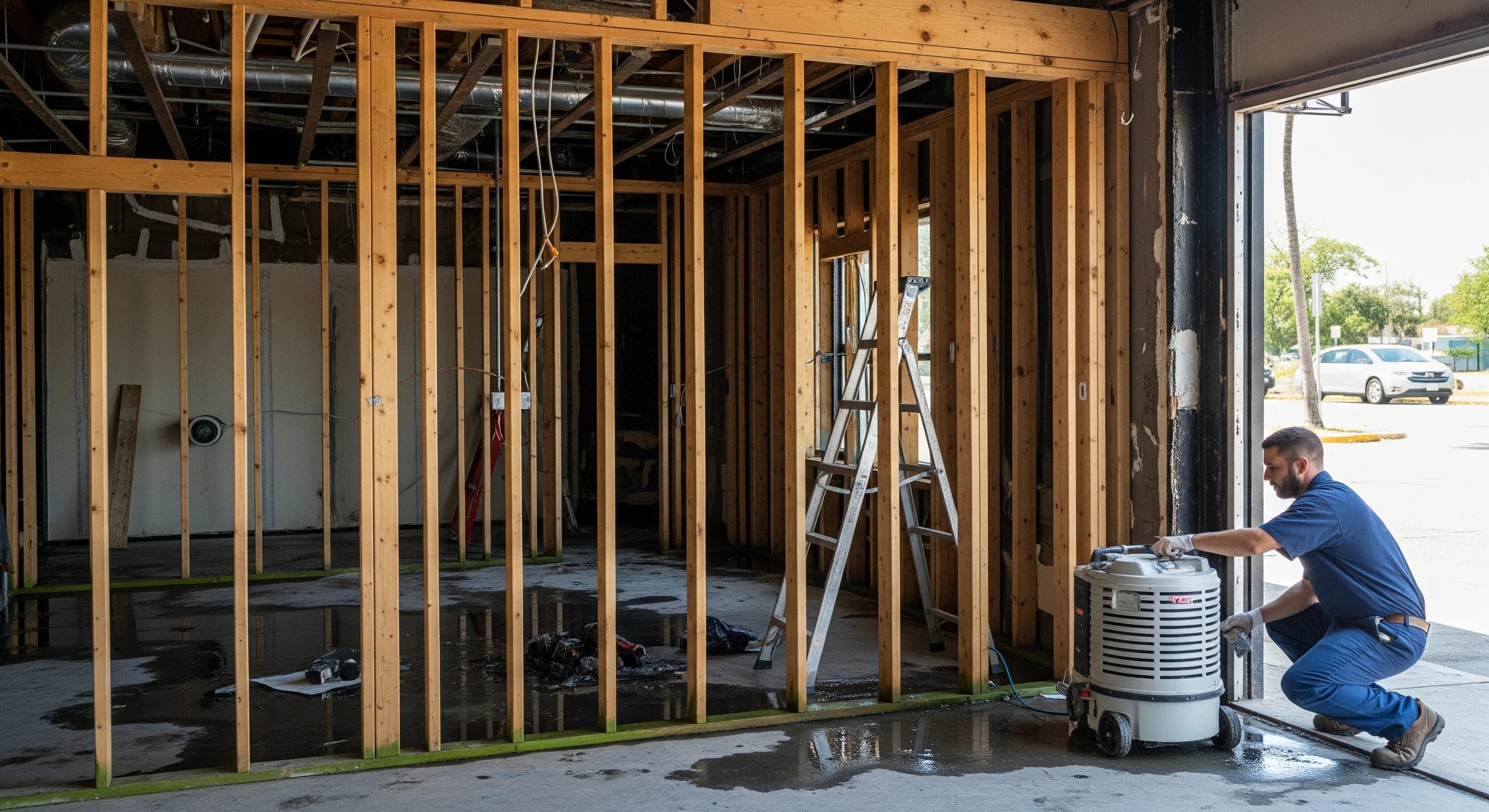
After mitigation, structures must be fully dried and stabilized. Industrial drying equipment and monitoring tools ensure moisture is eliminated from walls, floors, and framing. This phase protects long-term structural integrity.
Preparing for Reconstruction
Stabilization creates a safe foundation for repairs. Without this step, rebuilding efforts risk failure or recurring damage. Thorough drying ensures repairs last.
Phase 5: Structural Repairs and Reconstruction
Restoring Safety and Function
Damaged structural components are repaired or replaced to meet safety standards. Services like structural repairs address walls, ceilings, flooring, and support systems. The goal is to restore full functionality, not temporary fixes.
Coordinating Trades and Timelines
Commercial projects often involve multiple trades and inspections. Coordinated reconstruction minimizes delays and keeps projects on schedule. Clear communication ensures business stakeholders remain informed.
Phase 6: Final Restoration and Business Recovery
Detailed Finishing and Quality Control
Final restoration includes finishes, cleaning, and system testing. HVAC, electrical, and safety systems are verified before reopening. Quality control ensures the space meets operational requirements.
Supporting Business Reopening
The final phase focuses on helping businesses resume normal operations. Professional commercial restoration teams coordinate inspections, documentation, and approvals. This structured approach reduces downtime and financial loss.
Why a Phased Commercial Restoration Process Matters
Faster Recovery, Fewer Surprises
Each phase builds on the previous one, reducing guesswork and delays. Businesses benefit from predictable timelines and controlled costs. A phased approach prevents overlooked damage.
Compliance and Risk Management
Commercial properties face regulatory, safety, and insurance requirements. Structured restoration ensures compliance at every stage. This protects businesses from future liability.
Key Takeaways
- Commercial disaster restoration follows a structured, multi-phase process.
- Emergency response limits damage and protects occupants.
- Assessment and mitigation guide efficient recovery planning.
- Structural drying and repairs restore long-term safety.
- A phased approach helps businesses reopen faster and stronger.
FAQs
1. How long does commercial disaster restoration take?
Timelines vary based on damage severity and property size. Minor incidents may take weeks, while major disasters can take months. A phased plan provides realistic expectations from the start.
2. Can businesses operate during restoration?
In some cases, partial operations are possible. Restoration teams often prioritize critical areas to support continuity. Safety and compliance always determine feasibility.
3. Is commercial restoration covered by insurance?
Many restoration services are covered, depending on policy terms and damage cause. Proper documentation during each phase supports claims. Restoration teams often assist with insurance coordination.
4. Why is professional restoration better than in-house cleanup?
Commercial disasters involve hidden risks and regulatory requirements. Professionals use specialized equipment and certified processes. This ensures safety, compliance, and long-term results.
5. What should a business do immediately after a disaster?
Ensure occupant safety and contact a professional restoration provider immediately. Avoid disturbing damaged areas until assessed. Early action significantly reduces downtime and repair costs.